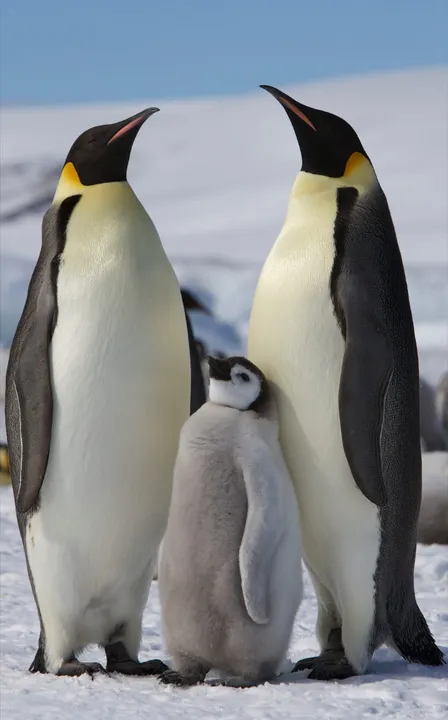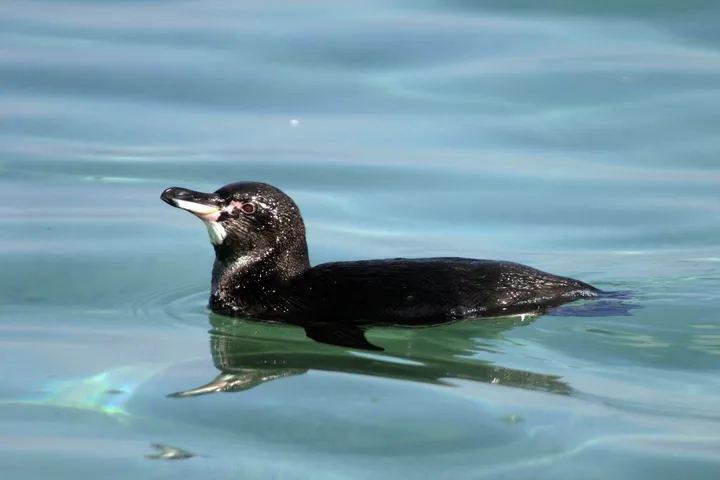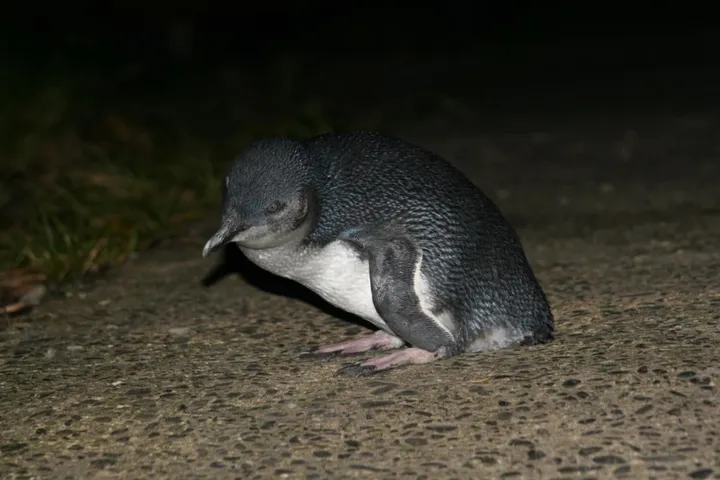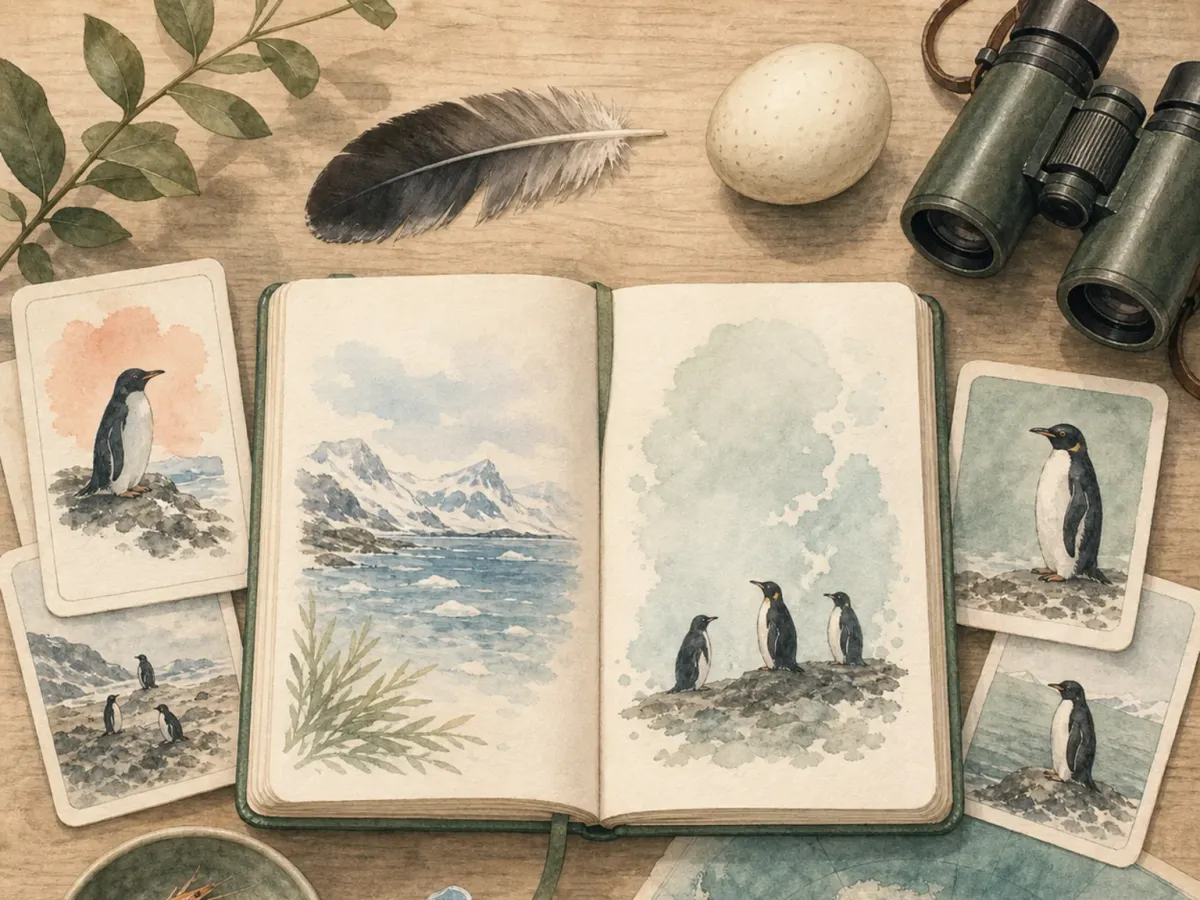
Penguins are birds that made the ocean their main stage.
If you want one sentence, use this: penguins are flightless seabirds whose wings became underwater propellers.
They have feathers, lay eggs, breathe air, and return to land or sea ice to breed. Those traits make them birds, not fish, and not mammals like seals.
Why penguins do not look like typical birds
Most bird wings are built for flying through air. Penguin wings are shorter, stiffer, and more like small paddles. In the water, a penguin beats those wings and moves forward like a black-and-white torpedo.
That is the heart of why penguins cannot fly. They did not lose wings. They reshaped the job of the wing.
The rest of the body follows the same bargain. Dense feathers help with insulation and waterproofing. The black-and-white pattern works as countershading in water. The feet sit far back, which helps with steering while swimming. On land this makes penguins look heavy and awkward; underwater it makes them efficient.
Penguins are not only Antarctic birds
Many people meet penguins through icebergs and Antarctica.
That picture is partly right. The emperor penguin and Adelie penguin are classic Antarctic species, but the penguin world is wider than Antarctica.
Some species breed on subantarctic islands. Others live around South America, southern Africa, New Zealand, and Australia. The little penguin comes ashore at night in Australia and New Zealand. The Galapagos penguin lives near the equator.
A better rule is: living penguins are almost entirely Southern Hemisphere birds, with the Galapagos penguin living near the equator and part of its range reaching north of it. There are no penguins native to the Arctic, and penguins are not all ice-and-snow birds.
How to read about penguins without getting lost
Beginners usually get tangled in three things: species, life cycle, and place.
For species, start with the penguin species guide. This site uses 18 living penguin species as its organizing frame, with one page for each species.
For life cycle, read about penguin moult, how penguins sleep, and how penguins raise chicks. Those pages explain how penguins eat, stand, replace feathers, and get chicks ready for the sea.
For place, use where to see penguins and the country guides. Watching penguins is not only a question of location. Season, distance, local rules, and breeding-site disturbance all matter.
If this is your first visit, take the path in that order: understand that penguins are birds, pick one species, then return to the wider ecology of sea ice, krill, ocean food webs, and conservation.
FAQ
Are penguins birds?
Yes. Penguins have feathers, lay eggs, breathe air, and belong to birds. Their wings are shaped into flippers for underwater movement.
Can penguins fly?
Penguins cannot fly in air. Their body plan is built around swimming and diving instead.
Do all penguins live in Antarctica?
No. Emperor and Adelie penguins are Antarctic icons, but penguins also live around southern Africa, South America, New Zealand, Australia, and the Galapagos region.