I used to read “Antarctic sea ice” as one white surface.
When I started reading more about the emperor penguin, that surface split into different kinds of ice. One of the most important is fast ice.
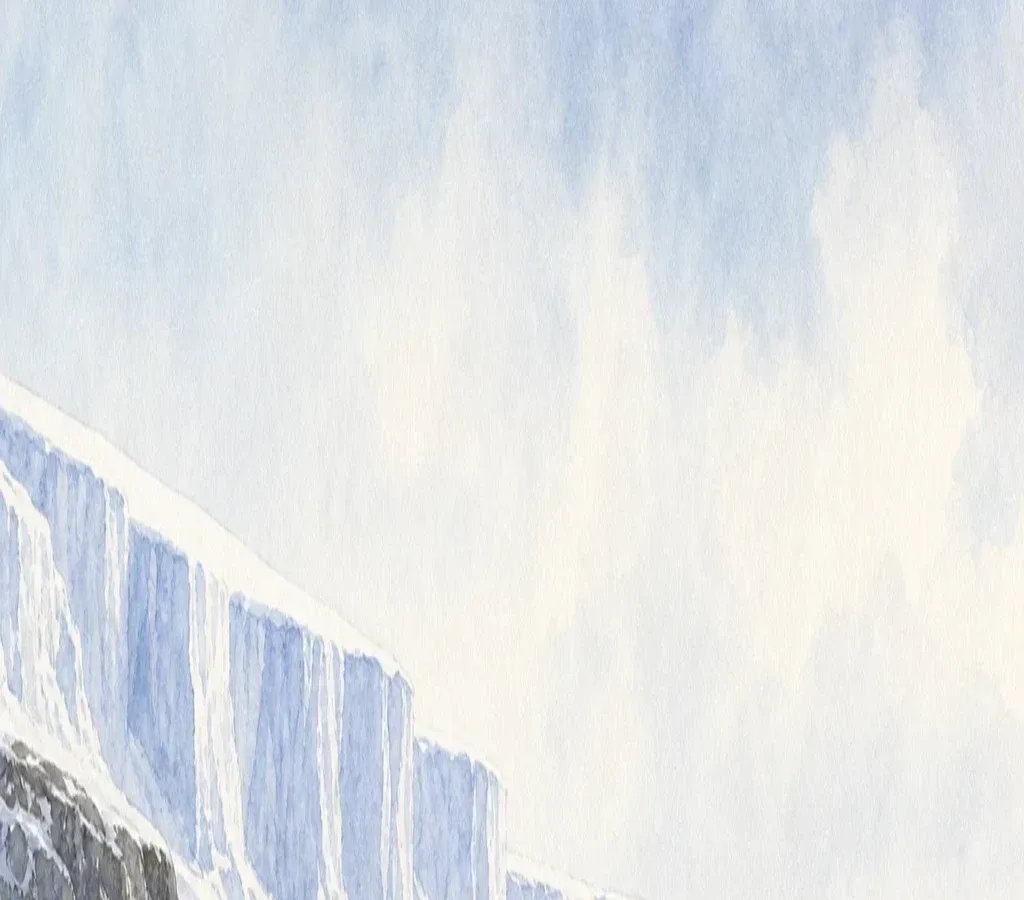
Fast ice is not ice that moves quickly. Here, “fast” means fixed. It is attached to a coast, ice wall, ice-shelf front, shoal, or grounded iceberg, unlike pack ice that drifts with wind and currents.
That sounds like a snow-and-ice term. For emperor penguins, it is a life-cycle term.
Fixed sea ice is a floor that can disappear
The Australian Antarctic Program describes fast ice as ice attached to shore or another fixed feature. It can extend only a few meters, or hundreds of kilometers. Research stations, Weddell seals, and emperor penguins all use it as a seasonal platform.
For emperor penguins, that platform matters deeply.
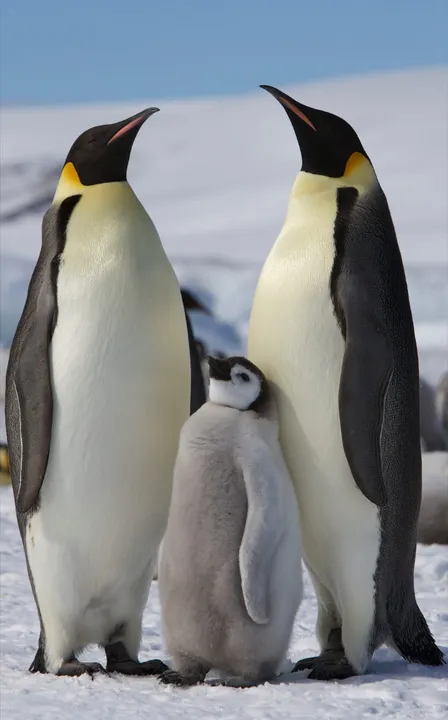
They breed in the Antarctic winter. After the female lays one egg, the male incubates it, holding it on his feet under the brood pouch. That egg cannot fall into the sea. The young chick cannot enter water before waterproof feathers are ready.
So “there is sea ice” is not enough. The ice has to be in the right place, last through the right months, and remain stable enough for parents to alternate between feeding at sea and returning to the same colony.
That is what fast ice means here. It is not scenery. It is the floor.
Emperor penguins need time, not only area
News reports often use total Antarctic sea-ice extent to explain climate change. That index matters, but it does not directly tell you whether one emperor penguin colony can succeed.
Emperor penguins need a timeline.
Winter needs stable ice for incubation. In spring, chicks are larger but still not fully waterproof. In early summer, sea ice begins to thin and break. If that happens too early, chicks can be forced into water before they are ready.
The record and near-record low sea-ice years from 2022 to 2024 made researchers especially worried for this reason. Not every missing patch of sea ice touches penguins. When the missing patch is the one under a breeding site, the effect is direct.
The climate change article looks at the wide picture. Fast ice is about the small piece underfoot.
During moult, the floor becomes survival equipment
The fast-ice problem is not limited to breeding.
During moult, adult emperor penguins lose complete waterproofing and cannot enter the sea to feed for weeks. They have to stand on land or stable ice until old feathers are replaced and the new coat is ready. The broader mechanism is covered in the catastrophic moult article.
If fast ice near a moulting area breaks before moult finishes, the risk is more than “nowhere to stand.” The bird may be pushed into cold water, burn fat faster, or move to smaller and more crowded ice, raising hypothermia and other survival risks.
Recent satellite work is beginning to map emperor penguin moulting sites too. That turns fast ice from a breeding-site issue into a full annual-cycle issue.
Not all sea ice is fast ice
One detail is easy to blur.
Pack ice also matters to penguins. Adelie, chinstrap, and gentoo penguins forage along ice edges, and emperor penguins move through several ice conditions. Sea ice also shapes the food web because juvenile krill often feed on algae under the ice, a link explored in the Antarctic food chain article.
Fast ice is special because it is fixed. It makes one place predictable for a period of time.
Breeding needs predictability. Moult needs predictability. Research needs predictability too. When predictability falls, emperor penguins spend more energy moving, waiting, and changing routes.
That is why, when the emperor penguin was listed as Endangered in 2026, sea ice was not an abstract background. It was the infrastructure connecting eggs, chicks, and adult moult.
References
- Australian Antarctic Program: Fast ice
- Labrousse et al., 2023, Where to live? Landfast sea ice shapes emperor penguin habitat around Antarctica
- Communications Earth & Environment, 2025, regional emperor penguin decline
- IUCN, 2026, emperor penguin listed as Endangered
FAQ
What is the difference between fast ice and pack ice?
Fast ice is attached to coasts, ice walls, ice-shelf fronts, shoals, or grounded icebergs. Pack ice drifts with wind and currents.
Do emperor penguins always breed on fast ice?
Most colonies rely on stable sea-ice platforms, but a few sites use ice shelves, land-edge sites, or unusual platforms.
Why does declining fast ice matter for emperor penguins?
Eggs, young chicks, and moulting adults cannot safely stay in water. If the ice breaks too early, breeding failure and adult moult risk rise.